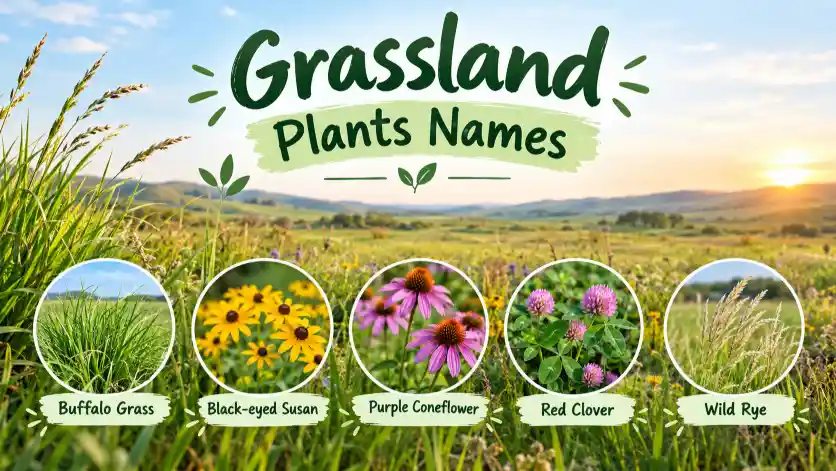
Grasslands are open areas where grasses and wildflowers grow across wide stretches of land. These habitats support many plant species, from tall prairie grasses to colorful wildflowers. Grassland plants can survive different conditions, including seasonal drought, strong winds, and grazing animals.
If you are studying nature, learning plant names, or exploring different ecosystems, this guide covers 100+ grassland plants, including grasses, wildflowers, and plants found in prairies, savannas, and meadows.
Common Grassland Plants Names
These plants grow in grasslands around the world. Some provide food for grazing animals, while others support insects and wildlife.
- Big Bluestem A tall native grass found in North American prairies.
- Little Bluestem A prairie grass known for its blue-green leaves.
- Buffalo Grass A low-growing grass adapted to dry conditions.
- Switchgrass A tall grass that provides food and shelter for wildlife.
- Indian Grass A warm-season grass native to North American grasslands.
- Bermuda Grass A spreading grass that grows well in warm climates.
- Ryegrass A grass commonly found in pastures and meadows.
- Timothy Grass A grass often grown for animal hay.
- Fescue A group of grasses found in grasslands and pastures.
- Blue Grama A short prairie grass adapted to dry environments.
- Red Fescue A grass that grows in meadows and open habitats.
- Crested Wheatgrass A grass used in pastures and land restoration.
- Prairie Junegrass A small grass native to North American prairies.
- Needlegrass A group of grasses with long, pointed seeds.
- Pampas Grass A tall grass native to South America.
Grassland Wildflowers Names
Wildflowers add color to grasslands and provide nectar and pollen for pollinators.
- Black-Eyed Susan A yellow flower with a dark center.
- Purple Coneflower A purple wildflower that attracts bees and butterflies.
- Prairie Blazing Star A purple-flowering plant found in North American prairies.
- Common Yarrow A flowering plant with clusters of small blooms.
- Buttercup A plant known for its bright yellow flowers.
- Wild Bergamot A fragrant plant with purple or pink flowers.
- Prairie Clover A native wildflower with small clustered blooms.
- Goldenrod A yellow-flowering plant that supports pollinators.
- Milkweed A flowering plant that provides food for monarch butterfly caterpillars.
- Indian Paintbrush A wildflower known for its colorful bracts.
- Lupine A flowering plant with tall clusters of blooms.
- Coreopsis A plant with cheerful yellow or orange flowers.
- Blanket Flower A colorful wildflower with red and yellow petals.
- Wild Aster A flowering plant with star-shaped blooms.
- Prairie Smoke A prairie plant with distinctive feathery seed heads.
- Oxeye Daisy A white flower with a yellow center.
- Field Scabious A wildflower with rounded purple flower heads.
- Cornflower A blue-flowering plant found in some grassland habitats.
- Wild Poppy A flowering plant with bright, delicate petals.
- Field Pansy A small wildflower found in fields and open habitats.
Prairie Grassland Plants Names
Prairies are grasslands found mainly in North America. They contain native grasses, flowering plants, and other species adapted to seasonal changes.
- Big Bluestem
- Little Bluestem
- Switchgrass
- Indian Grass
- Blue Grama
- Buffalo Grass
- Sideoats Grama
- Prairie Dropseed
- Canada Wild Rye
- Needle-and-Thread Grass
- Prairie Cordgrass
- Junegrass
- Purple Prairie Clover
- Leadplant
- Compass Plant
- Prairie Dock
- Rattlesnake Master
- Prairie Phlox
- Wild Senna
- New England Aster
These plants help maintain prairie ecosystems by protecting soil, supporting insects, and providing food or shelter for wildlife.
Savanna Grassland Plants Names
Savannas are tropical or subtropical grasslands with scattered trees and shrubs. Many plants can tolerate heat and seasonal dry periods.
- Red Oat Grass A grass found in some tropical and subtropical grasslands.
- Rhodes Grass A useful forage grass grown in warm regions.
- Lemon Grass A fragrant grass grown in tropical climates.
- Bermuda Grass A spreading grass that tolerates heat.
- Elephant Grass A tall grass native to parts of Africa.
- Kangaroo Grass A native Australian grass.
- Spinifex A name used for several grasses, including species adapted to dry Australian landscapes.
- Themeda Triandra A widespread grass found in African, Asian, and Australian grasslands.
- Guinea Grass A tall grass grown in tropical regions.
- Lovegrass A group of grasses found in warm and dry habitats.
- Acacia A group of trees and shrubs found in many savannas.
- Baobab A tree associated with African savanna landscapes.
- Umbrella Thorn Acacia A tree common in parts of the African savanna.
- Marula A tree found in parts of southern and eastern Africa.
- Shea Tree A tree native to parts of Africa, including savanna regions.
Note: Savannas include both grasses and woody plants. Not every species listed grows throughout all savanna regions.
Temperate Grassland Plants Names
Temperate grasslands experience seasonal temperatures and often have rich soils. Their plant communities vary by region.
- Big Bluestem
- Little Bluestem
- Switchgrass
- Timothy Grass
- Fescue
- Blue Grama
- Buffalo Grass
- Sideoats Grama
- Prairie Junegrass
- Needlegrass
- Yarrow
- Black-Eyed Susan
- Purple Coneflower
- Goldenrod
- Wild Bergamot
- Prairie Clover
- Milkweed
- Aster
- Blazing Star
- Compass Plant
These plants grow in different temperate grasslands, including prairies, steppes, and pampas. Their exact distribution depends on soil, rainfall, and climate.
Grassland Plants Found in India and Pakistan
South Asia has many grassland and open-habitat plants. Some grow in dry plains, while others occur in seasonal meadows and wetter grasslands.
- Doob Grass A spreading grass also known as Bermuda grass.
- Kans Grass A tall grass found in open areas and seasonal wetlands.
- Elephant Grass A tall grass found in warm regions.
- Sehima A genus of grasses found in tropical grasslands.
- Cenchrus A genus that includes grasses adapted to dry conditions.
- Chrysopogon A grass genus found in several tropical habitats.
- Heteropogon contortus A grass with twisted seed awns found in warm grasslands.
- Dhaman Grass A common name used for certain forage grasses in South Asia.
- Sacred Lotus An aquatic plant, not a typical grassland species.
- Calotropis A hardy flowering shrub found in dry, open areas.
- Ziziphus A genus of shrubs and trees found in dry landscapes.
- Acacia Trees and shrubs found in some dry grassland habitats.
- Desmostachya bipinnata A grass associated with dry and sandy habitats.
- Apluda mutica A grass found in tropical and subtropical regions.
- Imperata cylindrica A widespread grass that can grow in open habitats.
Plant distribution varies across the region. Some species are more typical of scrubland, sandy areas, or wetlands than grasslands.
Tall Grassland Plants Names
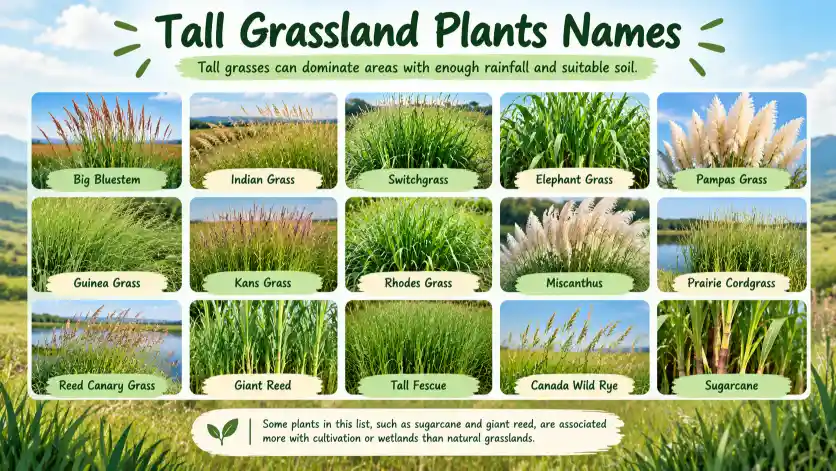
Tall grasses can dominate areas with enough rainfall and suitable soil.
- Big Bluestem
- Indian Grass
- Switchgrass
- Elephant Grass
- Pampas Grass
- Guinea Grass
- Kans Grass
- Rhodes Grass
- Miscanthus
- Prairie Cordgrass
- Reed Canary Grass
- Giant Reed
- Tall Fescue
- Canada Wild Rye
- Sugarcane
Some plants in this list, such as sugarcane and giant reed, are associated more with cultivation or wetlands than natural grasslands.
Short Grassland Plants Names
Short grasses often grow in dry grasslands where limited rainfall restricts plant height.
- Buffalo Grass
- Blue Grama
- Prairie Junegrass
- Crested Wheatgrass
- Sheep Fescue
- Sand Dropseed
- Sideoats Grama
- Poverty Grass
- Needlegrass
- Bluegrass
- Prairie Clover
- White Clover
- Yarrow
- Wild Thyme
- Field Pansy
Plants can help protect the soil and provide food for insects and grazing animals.
Grassland Plants and Their Uses
Grassland plants support people, animals, and the wider environment in several ways.
| Plant | Common Use or Benefit |
| Buffalo Grass | Ground cover and grazing |
| Timothy Grass | Hay for livestock |
| Switchgrass | Wildlife habitat and restoration |
| Big Bluestem | Forage and soil protection |
| Bermuda Grass | Lawns, pasture, and erosion control |
| Milkweed | Food source for monarch caterpillars |
| Goldenrod | Nectar for pollinators |
| Yarrow | Wildlife habitat and traditional garden use |
| Elephant Grass | Fodder and biomass |
| Acacia | Shade, habitat, and soil benefits in suitable regions |
Plants provide food and shelter for wildlife, support pollinators, and help reduce soil erosion. Their benefits depend on the species and local environment.
Why Are Grassland Plants Important?
Grassland plants play a major role in healthy ecosystems.
- Prevent soil erosion: Plant roots help hold soil in place.
- Support wildlife: Grasses and wildflowers provide food and shelter.
- Feed grazing animals: Many grass species support wild herbivores and livestock.
- Support pollinators: Flowering plants provide nectar and pollen for bees and butterflies.
- Store carbon: Grassland roots and soils can store significant amounts of carbon.
- Maintain biodiversity: Different plant species create habitats for insects, birds, and other animals.
Protecting native grassland plants helps maintain healthy landscapes and supports local biodiversity.
FAQs About Grassland Plants
What are the most common grassland plants?
Common examples include big bluestem, buffalo grass, switchgrass, blue grama, yarrow, goldenrod, and black-eyed Susan. The most common plants depend on the region.
What types of plants grow in grasslands?
Grasslands support grasses, wildflowers, sedges, herbs, and some shrubs or scattered trees. Rainfall and temperature help determine which species grow in each area.
What are five examples of grassland plants?
Five examples are big bluestem, buffalo grass, switchgrass, purple coneflower, and goldenrod.
Do trees grow in grasslands?
Yes. Some grasslands contain scattered trees and shrubs. Savannas, for example, often have grasses mixed with acacia trees or other woody plants.
Which plants grow in dry grasslands?
Plants such as buffalo grass, blue grama, needlegrass, and certain Cenchrus species can tolerate relatively dry conditions. Their success depends on local soil and climate.
Conclusion
Grassland plants include many types of grasses, wildflowers, herbs, shrubs, and scattered trees. Examples such as big bluestem, buffalo grass, goldenrod, purple coneflower, and elephant grass show the diversity of these habitats.
Learning grassland plant names can help you understand ecosystems, identify local vegetation, and appreciate the role plants play in supporting wildlife and protecting soil.
Read More:
- Icelandic Last Names: 100+ Authentic Names to Explore
- Beach House Names: Cute, Funny, and Clever Ideas
- Funny Troll Names: 100+ Hilarious Ideas (2026)

I’m Simran Jay, a passionate name researcher and writer focused on meaningful, distinctive, and modern names. I enjoy exploring name origins, meanings, and trends, and I create simple, engaging guides to help readers find the right name.